Why It Still Matters Where a Nail Is Made
The case I’d make to a lumber dealer starts with a ruler, and with a container of deck nails my old employer bought in 2005.
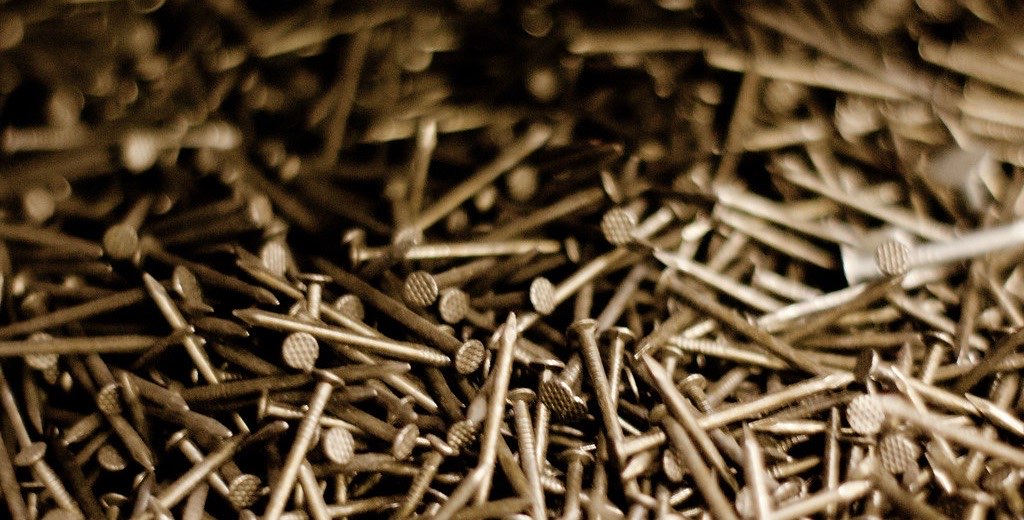
Most of the nails driven in this country are made somewhere else, and that has been true for a long time. When people ask me why it matters where a nail comes from, they usually expect a speech about flags and jobs. I care about jobs. The argument I’d make to a lumber dealer or a framing contractor who has never been inside a nail plant is a practical one, though, and it starts with a ruler.
The spec on the box
A 16d common nail is three and a half inches long with a shank diameter of 0.162 inches and a head of a set size. A hot-dip galvanized nail for treated lumber is supposed to carry a minimum weight of zinc. Building codes, connector catalogs and shear-wall schedules are written around those numbers. An engineer who specifies a nailing pattern assumes the nail is what the box says it is.
Most of the time it is.
In the mid-2000s, when I ran operations for a building-supply distributor, we bought a container of imported hot-dip galvanized deck nails at a price that should have made us suspicious. Two summers later the calls started. Decks built with those nails had rust streaking down the boards. When we finally sent a few boxes out for testing, the zinc coating was a fraction of what it should have been. We made our customers whole. It cost us many times what we had saved, and I spent a lot of Saturdays on job sites apologizing to deck builders.
Plenty of overseas plants make good nails. The difference is access. From a domestic plant you can ask for the coating weight tests, the shank diameter checks and the lot records, and someone who answers to you will produce them by the end of the week. You can drive over and watch the line. Distance makes all of that harder, and the cheapest bid on a container rarely comes with the most testing.
Lead time
A container of nails ordered from overseas spends weeks on the water, then more weeks getting through a port, a rail yard and a warehouse. Add the time to place and confirm the order and a dealer buying imports is forecasting three or four months out, and carrying inventory to cover the gap.
From our plants, most customers in the Midwest and South get standard items in one to two weeks. A distributor can carry less safety stock with that, and tie up less money in boxes on a shelf. It also helps when May shows up early and every framing crew in the county wants 16d sinkers the same week.
In 2021, with containers parked offshore for weeks, the dealers who had a domestic supplier kept their contractors working. The ones who didn’t spent the summer on the phone.
Skills
People picture a nail plant as a building full of machines that run themselves. Ours do run fast. Behind every line there’s a wire drawer who can hear a bad die before the gauge catches it, a header setter who can get a new item running in twenty minutes and a maintenance tech who keeps a forty-year-old drawing block running next to a robot palletizer we installed last year.
Those skills come from other people on the floor. They aren’t in a manual. When a plant closes, the skills leave town with it, and they don’t come back when the next plant opens. I have watched that happen in towns I know well, including the one I grew up in.
A town with a working wire mill has electricians, millwrights and machinists, and every other manufacturer in the area hires from that pool. A town without one eventually has fewer of them. That is the jobs argument I’m willing to make.
Competing
I don’t want the market walled off. Import competition made us better. It pushed us to automate, to get changeovers down and to take service seriously. When imports are sold below cost, enforcing the trade laws already on the books is fair, and it has been necessary in our industry more than once. Still, if a customer buys from us only because of a tariff, we haven’t earned the order.
What we can offer is product that measures the same from lot to lot, short lead times, a plant you can visit and a customer service team in Danville that picks up the phone. Sometimes that’s worth a few cents a pound. Sometimes it isn’t, and a dealer is right to buy that item elsewhere. I’d like the decision made with the lead time and the test data on the table along with the price.
Two questions
If you buy nails for a yard, a truss plant, a pallet shop or a crew, try these the next time you compare bids.
Where was the wire drawn and the nail formed? The headquarters address and the packing location don’t answer that.
How do you know it meets the spec? Ask for the test data. Ask how often they check coating weight and shank diameter, and what happens to a lot that fails. A good supplier, domestic or imported, will have the answer ready. If it takes a week to arrive, you’ve learned something anyway.